
The Kailasanathar Temple and its Pallava stonework
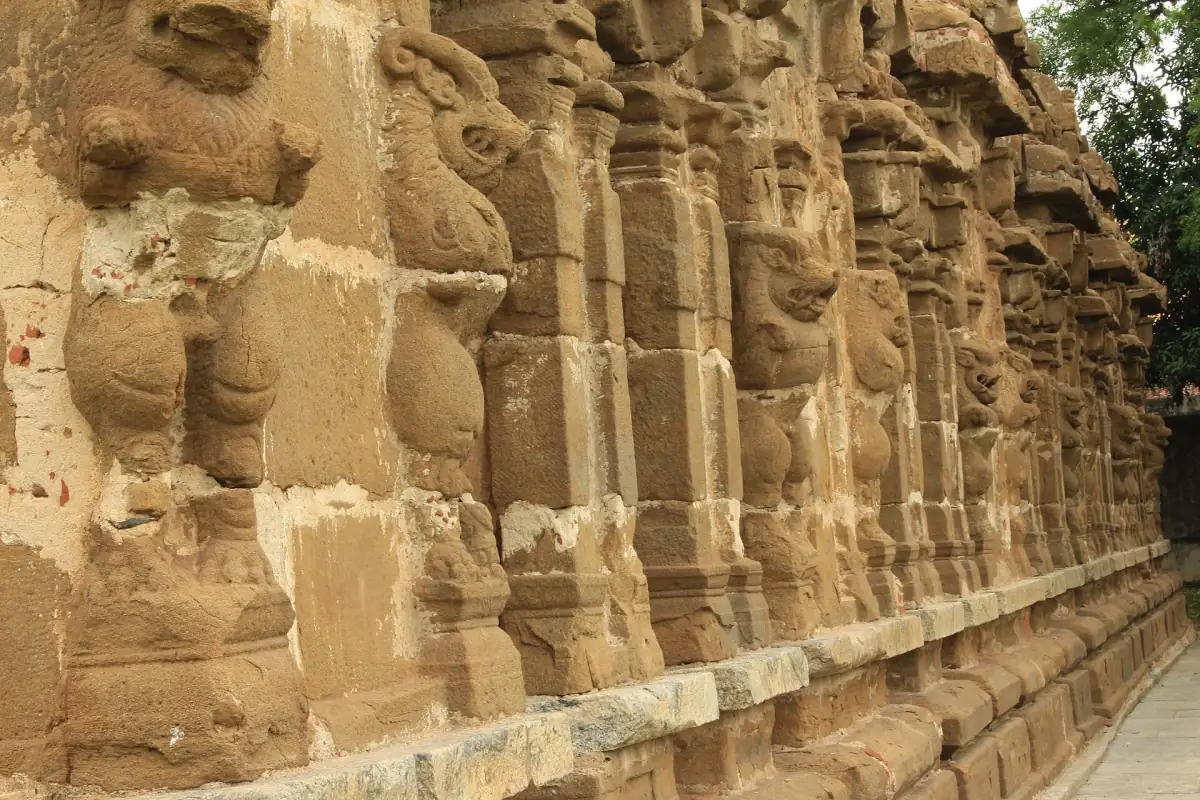
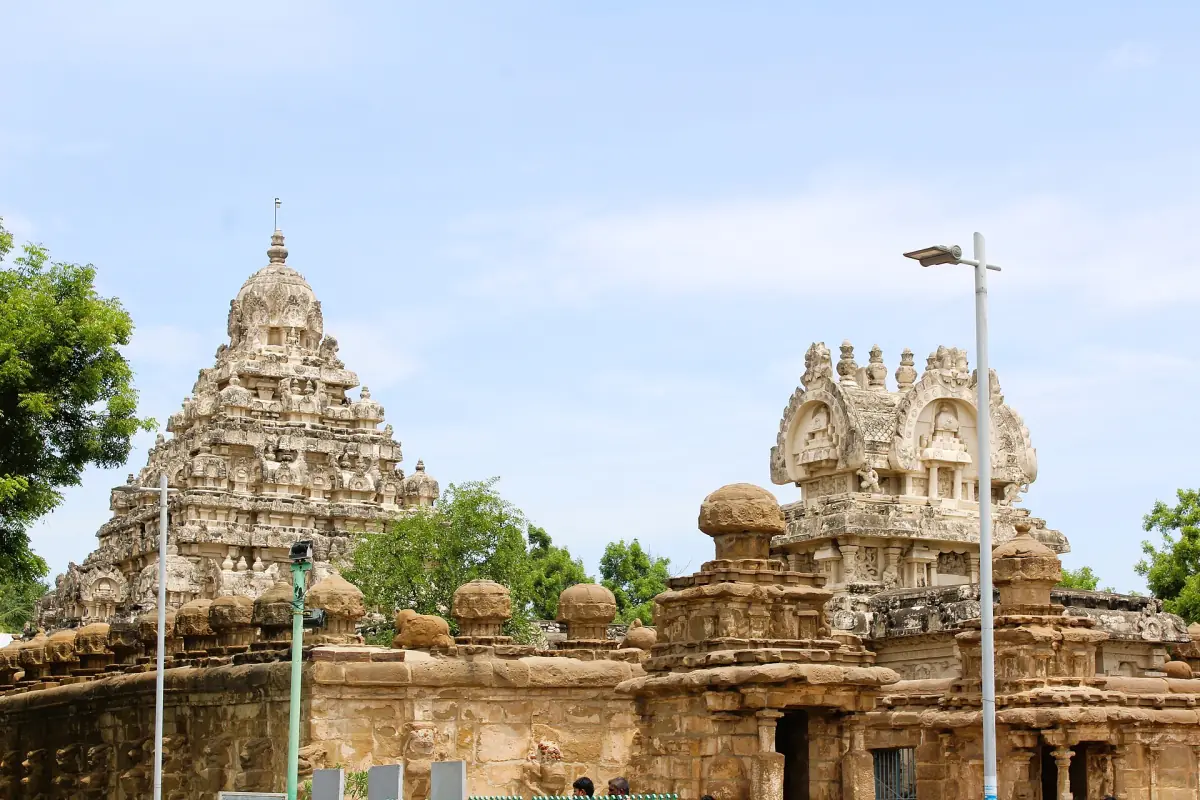
The Kailasanathar Temple, also called Rajasimhesvaram, is a Pallava building attributed to the ruler Rajasimha. The UNESCO proposal for the Temples of Kanchipuram places his reign at 700 to 728 CE. It is built of sandstone on a granite base, and the walls carry rows of carved reliefs. Compared with the tall gateways of the later temples in Kanchipuram, this is a low and compact complex, and its charm lies in the carving rather than in height. The word Kanchipuram is sometimes spelled Kancheepuram, and locals simply say Kanchi.
The district tourism page speaks of the 7th century, so the date is best left as the Pallava period, and the building should not be pinned to a single year. For the wider story of the dynasty, see the Kanchipuram history page. For the other major shrines, the Kanchipuram temples page gives an overview.
A day built around Kailasanathar
This day pairs the Kailasanathar temple with Ekambareswarar and a silk weaving house, with a guide and entrance charges included.
Hand-picked tours, booked through GetYourGuide. Prices are indicative starting prices in US dollars (as of October 2026). Tap a tour for live availability and the current price in your currency.
Kanchipuram temple tours
Guided days from Chennai and Mahabalipuram that include Kanchipuram temples, and a longer route across Tamil Nadu. Entrance fees, guides and meals are handled differently, so check each offer.
Timings and the midday break
The district tourism page gives 06:30 to 12:30 and 16:00 to 19:30 for the Kailasanathar Temple. The page is undated, so read it as a published guide and not as a guarantee for the day of your visit. The gap between half past twelve and four in the afternoon is the part to plan around. Starting with this temple right after it opens is a simple way to fit it in before the break.
The temple is looked after by the Archaeological Survey of India, according to the district administration. That fact alone does not tell you what the entrance arrangement or the opening hours are, so do not assume an all day opening or a particular fee. Ask at the gate and follow the posted notices.
The narrow passage
A religious visitor guide describes a narrow circumambulatory passage around the main shrine. Whether it can be entered today is something only the staff on the day can tell you, so treat it as a feature of the building and not as an access promise. Steps, thresholds and tight spaces are part of an old temple, and the site should not be expected to be step free.
Vaikunta Perumal Temple
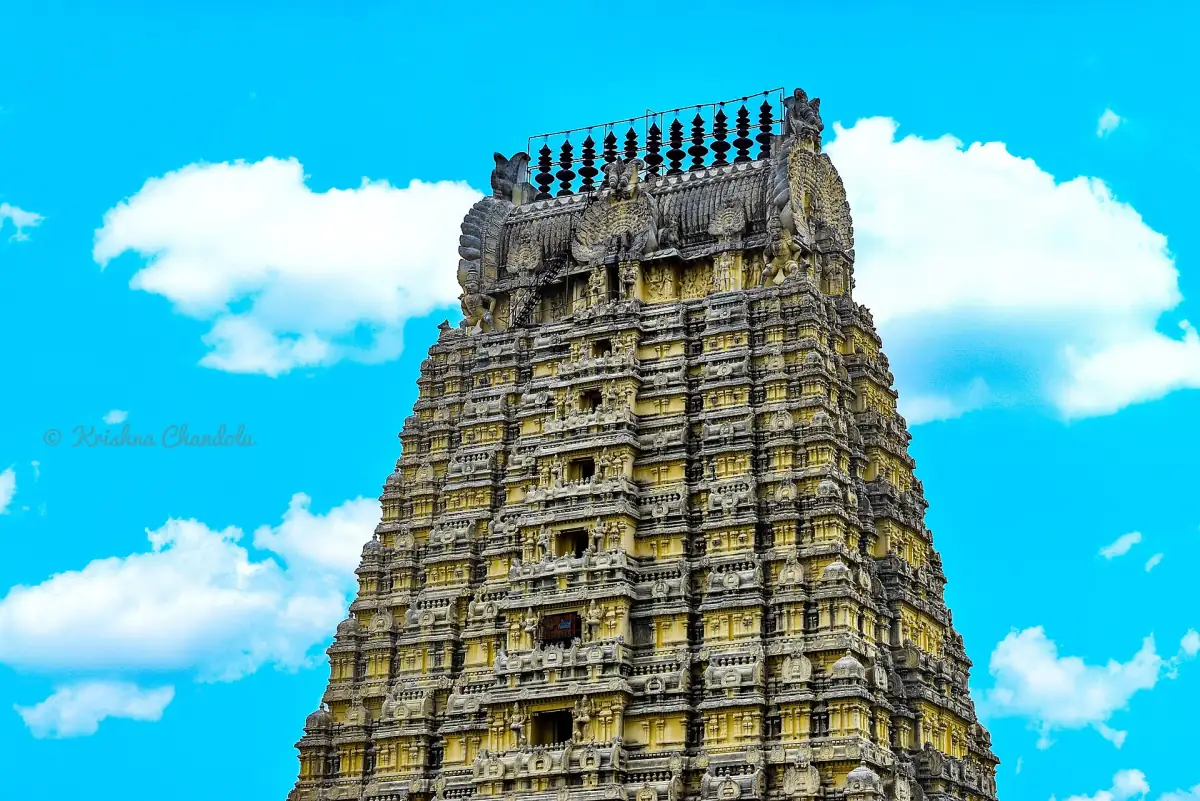
The Vaikunta Perumal Temple in Kanchipuram town is a Vishnu temple that belongs on the same short list as the Kailasanathar Temple, because both are Pallava foundations. The UNESCO proposal knows it as Paramesvara Vinnagaram. A religious guide describes lion pillars, narrative reliefs with Pallava Grantha script and a shrine for Vishnu rising over several storeys.
Do not mix it up with the Vaikuntaperumal Temple in Uthiramerur. That is a different temple elsewhere in the district, and its inscriptions about village administration do not belong to the temple in Kanchipuram town. If a driver or a map points you to Uthiramerur, you have the wrong place for this visit.
A state tourism index lists 06:00 to 12:00 and 16:00 to 18:00 for the Vaikunta Perumal Temple. Treat this as a rough guide only, arrive early in the afternoon session and ask on site when the gate closes.
Planning a half day around the Pallava temples
Together the two temples make a compact programme for people interested in early architecture. One option is to see the Kailasanathar Temple in the first hour after opening, move on to the Vaikunta Perumal Temple while the morning session lasts, and have lunch in town while the gates are closed. That is your own plan, not a tested timing, and the time you need depends on how long you want to look at the reliefs. A religious guide places the Kailasanathar Temple about 3 km from the bus station, an orientation figure and not a measured walking distance.
If you want to go from sandstone to a Vishnu temple with a pillared hall, continue to the Varadharaja Perumal Temple. The goddess temple in the middle of town, the Kamakshi Amman Temple, makes a good late afternoon stop. A day trip to Mahabalipuram shows the same dynasty on the coast, and the Mahabalipuram page explains how the two fit together.
Etiquette
Take your shoes off before the entrance, cover your shoulders and knees and speak quietly. These are general rules for Tamil Nadu temples and not a written dress code for this site. Do not photograph a deity without permission and follow the signs and the staff.
Kailasanathar and Vaikunta Perumal: frequently asked questions
When was the Kailasanathar Temple built?
It is a Pallava temple attributed to Rajasimha, whose reign the UNESCO proposal places at 700 to 728 CE. The Pallava period around then is the safest way to date it.
What are the opening hours of the Kailasanathar Temple?
The district tourism page gives 06:30 to 12:30 and 16:00 to 19:30, undated. Ask on site, because the hours can differ on the day.
Do I need a ticket for the Kailasanathar Temple?
Ask at the gate. The care of the Archaeological Survey of India does not by itself tell you what the entrance arrangement is.
Is the Vaikunta Perumal Temple in Kanchipuram the same as the one in Uthiramerur?
They are two different temples. The one in Kanchipuram town is a Pallava Vishnu temple, while Uthiramerur lies elsewhere in the district.
Is the Kailasanathar Temple part of the UNESCO proposal?
Yes, as a component of the Temples of Kanchipuram, which is on UNESCO's Tentative List, submitted on 13 April 2021. A Tentative List entry is a preliminary step and not a World Heritage inscription.